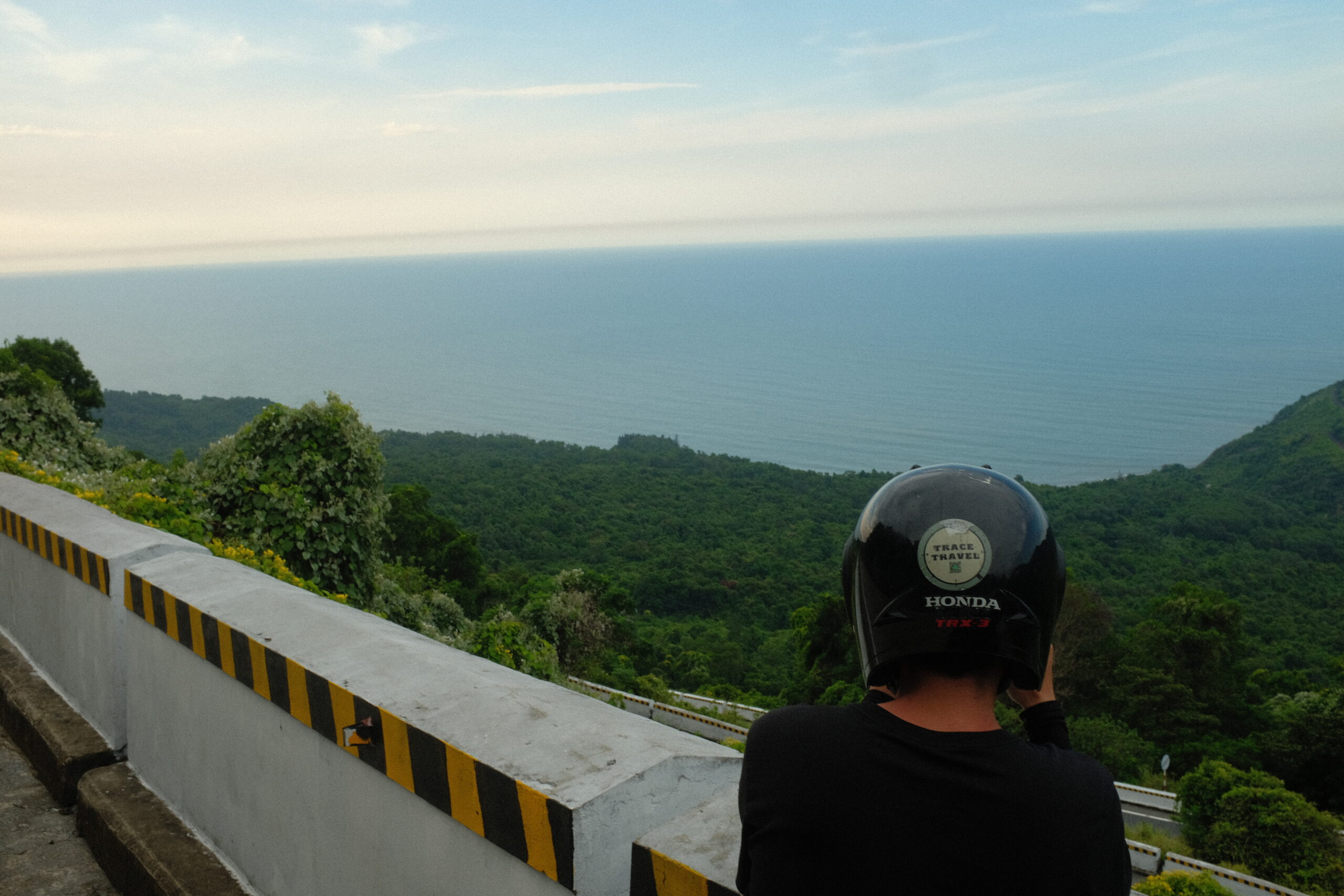


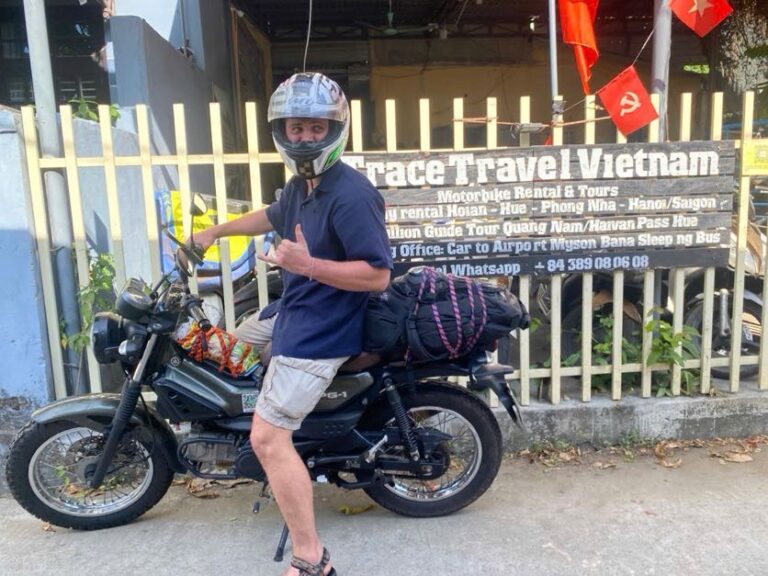
 Rental
-
 Recommended by 100% of travelers on Tripadvisor
- starstarstarstarstar5 stars REAL google map reviews
-
 Trusted by 2000+ travelers every year
Hoi An to Hue Motorbike rental (one-way)
One-Way Motorbike Rental: Hoi An to Hue - Explore one of Vietnam’s most stunning coastal routes with a self-guided trip. Affordable price includes free transfer of 1 piece of luggage per bike, plus a detailed itinerary with suggested stops, lunch options, and entrance fees. Just hop on and enjoy the ride - we’ll take care of the rest.
Check Availability

One-Way Drop Off

Luggage Transfer

24/7 Roadside Assistance

Custom Routes
Detail

Full Google Map Stops by Stops: https://maps.app.goo.gl/sRH4LwCvSgbCU56n8
Down here is a complete guide of this Hoi An to Hue motorbike trip, you can read here or come to our Complete Guide on our blogs
Motorbike Rental Process
It’s really that simple. All you need to do is send us a message on our hotline (WhatsApp) with a few details:
Your Name / Date / Time / Type of bike / Number of helmets / Number of luggage pieces you want to send / Your hotel address in Hoi An.
That’s it, we’ll confirm your booking, arrange to meet you right at your hotel, sign the rental contract, and you’ll be ready to hit the road.
During our conversation, we’ll also provide you with all the trip information you need a complete, detailed guide so you can do the whole journey smoothly on your own.
If anything happens along the way, we’ll always be there to help you solve it quickly, thoroughly, and safely… so you can keep going without worries.
When you reach your destination, just return the bike in its original condition. We’ll deliver your luggage back to you at our office (conveniently located right in the city center).
Things You Need to Know to Ride Safely

Make sure you are truly capable of riding this motorbike. Don’t underestimate it… Serious accidents still happen to tourists who are overconfident, ignore speed limits, and break traffic laws.
Traffic in Vietnam is different from many other places in the world… and traffic in Central Vietnam is different again from other parts of the country. Road skills and awareness of traffic laws here can be limited. This is partly because road infrastructure has only developed more recently, and many people are still used to moving around in low-traffic environments.
People here don’t always move in a predictable way. You might see vehicles going the wrong way, suddenly darting out from narrow alleys or houses… and elderly people or kids on electric bikes making sudden, repeated turns.
Hai Van Pass is an even bigger challenge. Traffic density isn’t too high here, but the long slopes demand your full concentration. Large trucks and fuel tankers (which aren’t allowed in the Hai Van Tunnel) will be using this route… and their drivers can be aggressive, often cutting into your lane on sharp corners. That’s why controlling your speed is crucial. Anytime your view is blocked, be ready.
If you’re riding a scooter, remember that scooters don’t have the same engine braking as manual or semi-automatic bikes. This means you’ll need to use your brakes more often, especially going down long mountain passes like Hai Van. Even the best brakes need time to cool down, if they overheat, they won’t work. That’s a disaster.
Although it’s rare, if you’re inexperienced, you could face this problem. Imagine your brake pads heating up every time you press them; you need to release them to let them cool down. The best way to avoid this is to go slow right from the start of the descent, so you don’t need to ride the brakes too much. Ride like that, enjoy the views, and don’t rush, or you’ll miss some of the best sights on Hai Van Pass.
About slippery roads… The surface of Hai Van Pass has been upgraded over the years, so it’s generally good. But when it rains (especially light drizzle), moisture can create a thin layer of moss, making it slippery, particularly on curves or downhill sections. Slow down when you see a wet road.
Even on sunny days, sometimes broken-down trucks leave oil streaks on the road… and yes, accidents have happened because of this.
From Hoi An to the foot of the pass isn’t difficult if you follow our map. It takes you along the coastline, which is usually quieter and straight, making it easy to ride. Only when passing through Da Nang city will you see more traffic, just keep to the right side and you’ll be fine.
All the routes we provide are safe, low-traffic, and easy to follow. There are a few unavoidable stretches like National Highway 1A, which is the main route across Vietnam and has more large vehicles. If you take this road, stay to the right, keep your speed under control, and pay attention to your surroundings.
There’s an alternative coastal road via Lang Co that avoids Highway 1A entirely, but it adds quite a bit of distance to your trip. If you have the time, it’s worth it.
What’s Along the Route? And What Should You Know About Each Stop?
Your journey begins as you ride out of Hoi An along the coast. About 10 km from the city, you’ll see a gas station on your right, in the same direction you’re heading. This is the most convenient place to fill up before continuing to your next stop.

The next stop is Marble Mountain, known locally as Ngũ Hành Sơn. The name means “Five Element Mountains,” representing the five elements that make up the universe in ancient belief: Fire, Water, Metal, Earth, and Wood. The most famous and most visited is Thủy Sơn (Water Mountain). The other mountains around the area are rugged and don’t have tourist spots.
Thủy Sơn is the largest, located right by the sea. Just follow our map and you’ll arrive at the ticket area. Park your bike nearby — usually, you’ll see women along the sidewalk inviting you to park in their lot. It’s fine to choose the closest one for convenience. Parking costs around 5,000–10,000 VND.
If you want, you can browse some souvenirs after your visit. Many stalls sell decorative stones, feng shui items, and gemstones. But unless you know gemstones well, avoid buying expensive ones — you could easily be overcharged or scammed. For most items, you can bargain a little, unless you feel it’s worth the asking price.
The entrance fee is currently about 40,000 VND, with the elevator ride costing 15,000 VND one way. My advice is to buy both the entrance ticket and a one-way elevator ticket to save energy and time for the rest of your trip. What’s on Thủy Sơn?
From the outside, it might look like just a solitary mountain. But once you take the elevator up, you’ll realize it’s bigger and more spread out than you imagined. There are many places to explore: ancient temples built by locals centuries ago, scenic viewpoints, and cool, beautiful caves.
Before I first visited, I thought there wasn’t much to see — just a crowded, touristy spot. But I was wrong. Many people feel the same, and you can check Google
Maps reviews to see how positively others describe it (except for the occasional annoyance of being asked to buy souvenirs, but this only happens at the base, and you can just walk past).

When you get off the elevator, look for the tourist map displayed along the way. Take a photo of it and start exploring. There are about 15 points of interest here. Visiting them all will take around 2–3 hours. To save energy and time for the rest of the journey, you can skip a few.
The must-sees are:
Vọng Hải Đài – A viewpoint where you can see the mountains and sea.
Tam Thai Pagoda – The oldest pagoda here.
Huyền Không Cave – A stunning, cool cave.
If you still want to see more caves, check out Âm Phủ Cave (“Hell Cave”), which is quite unique. There’s an extra 40,000 VND ticket for this one, but it’s worth it.
After Marble Mountain, you’ll return to the coastal road toward Da Nang. About 20 km later, you’ll reach the city’s long, beautiful My Khe Beach. If you’d like, you can stop to take some photos, with Sơn Trà Peninsula and its giant Lady Buddha statue in the background.
Continue along the beach road until you reach a three-way intersection. Going straight will take you into Sơn Trà Peninsula, but turn left according to our map, and you’ll arrive at Thuận Phước Bridge, Da Nang’s tallest and longest bridge. It’s the last bridge across the river, connecting the beachside to Da Nang’s downtown.
From the bridge, you’ll see the river mouth on your right, and the city skyline on your left. After crossing, you’ll be on Nguyễn Tất Thành Street, a long coastal road. Follow it for about 20 km until you reach the foot of Hai Van Pass.
From here, enjoy the winding coastal road climbing over the mountains. Stop for photos anytime you like. Our first recommended stop is at the Hòn Đá Thuyền Café. From here, you can walk out to a rock shaped like a boat’s bow and take an epic shot. Drinks here are very affordable — about 10,000–20,000 VND.
Continue to the top of the pass, where you’ll find the border between Da Nang and Huế. At the summit is Hải Vân Quan, an old fortress now restored as a landmark. Park your bike at the base and climb up to enjoy the view and learn more about the site from the small information center there.
From here, you’ll officially enter Huế province. You’ll notice a clear change in climate and culture between the two regions. I’ll say it again — stop anytime you feel like it, because the pass is only 20 km long. You might wish it lasted longer, but it doesn’t, so wander a bit, but keep track of time for the rest of the trip.
At the northern foot of Hai Van Pass, you’ll be greeted by a stunning view, Lăng Cô Bay. Stop here for a moment and take it in: a long, pristine beach, a sea channel connecting to Lập An Lagoon at the base of Bạch Mã Mountain.
We don’t want you to miss this, so our route has you stop at Lăng Cô Beach first for a break and lunch at one of the beachfront seafood restaurants. You can enjoy fresh, delicious seafood cooked by local chefs who’ve been perfecting these dishes for decades, all while gazing out at the beautiful beach.
After lunch, continue toward Lập An Lagoon, riding along the shore back toward the foot of Hai Van Pass for a short distance. This detour lets you see the lagoon’s full beauty. On the far side, you’ll find the base of refreshing waterfalls cascading from Bạch Mã Mountain. Stop at Suối Mơ Waterfall, change into your swimwear, and cool off in the fresh mountain water — it’s the perfect way to recharge after a long ride.
After your swim, continue around the lagoon and rejoin Highway 1A, passing through Phước Tượng Tunnel. Immediately afterward, turn right to leave the highway and return to the coastal road, crossing Tư Hiền Bridge. This bridge spans the sea and another massive lagoon — so wide you can’t see the other side, with a diameter of nearly 20 km.
Take some photos here, then ride along the coastal road through fishing villages. You’ll notice a cultural shift here, colorful architectural structures scattered along the roadside, like small temples. These are tombs in the distinctive imperial style of Huế.
One particularly unique spot is An Bằng Cemetery, a vast maze-like burial ground with enormous, ornate tombs. If you have time, turn right and explore — it’s an unforgettable experience.
By now, it’s likely late afternoon. We recommend not riding after dark, so to save time, cut back to Highway 1A for the final stretch into Huế City.
From here, it’s about 20 km (30 minutes) to the city center. Traffic will get heavier as you approach, especially during rush hour with workers and trucks on the road. Just ride slowly — by now, you’re a more experienced rider than when you started, and everything will be fine.
Our Huế office usually closes at 7:00 pm, so you can take your time. If you need extra time, just let us know and we’ll wait for you.
Which Bike Should You Choose for This Trip?
Here’s my breakdown of the pros and cons of each type of motorbike so you can pick the one that fits you best.
Automatic Scooter
Pros: Friendly for beginners, easy to use, comfortable seating, and usually has a spacious storage compartment so you can carry plenty of personal items. Cons: Consumes more fuel than other bikes, and on steep mountain roads like Hai Van Pass, there’s no engine braking system. You’ll have to rely entirely on your brakes and your downhill riding skills. Overusing brakes can overheat them (though this is rare), especially if you don’t give them time to cool down. Price range: Mid-level.
Semi-Automatic Bike
Pros: Shifts gears automatically without a clutch, easy for beginners (though you may need a quick lesson if you’ve never ridden one before). You can change gears to match your speed, which is handy on steep climbs. On descents, you can use lower gears for engine braking, reducing the need for heavy brake use — safer for mountain roads. Lighter than scooters, more fuel-efficient, and more nimble to handle. Cons: Smaller storage space, so you can’t carry much luggage.
Manual (Clutch) Bike
Pros: A more authentic riding experience, looks cooler, and gives you flexible control over acceleration and deceleration. The engine braking makes downhill rides safer without overusing brakes. Often has lower fuel consumption. Cons: Not beginner-friendly — poor clutch control can lead to stalling, damage to the bike, or even burning out the clutch. No under-seat storage.
What If Something Unexpected Happens?
Even with all our precautions and maintenance, some risks can still occur. Whatever happens, we’re always with you throughout your trip. While we’re not physically riding beside you like in a guided tour, we have a team on standby via phone and local contacts to support you as quickly as possible.
Common issues and how we handle them:
Bike breakdowns, Even though our bikes are either new or well-maintained, unexpected mechanical issues can happen. First, stay calm and call us. We’ll pinpoint your exact location and reach out to nearby repair shops (usually just a few kilometers apart in Vietnam) to get you back on the road quickly.
In rare cases where the bike can’t be fixed on the spot, we’ll ask you to leave it safely at that location. We’ll arrange a taxi or Grab for you to continue to your destination, and we’ll take care of recovering the bike later.
These situations are also when you might experience the warmth and kindness of Vietnamese people. Locals will often stop to offer help if they see someone in need on the roadside. So don’t worry too much, you’re not alone out there.
“Thank you for a long reading, I hope that this helps you for the Safe and nice Hai Van Pass trip.”
Trung Pham – Trace Travel Team
Price Detail
Price detail for Hoi An to Hue Motorbike rental (one-way)



Motorbike type
Price
Honda Airblade 125cc (Automatic Scooter)
19 $
2 days > 24,77 usd
3 days > 30 usd
4 days > 35 usd
Yamaha PG-1 - Supper Underbone (Semi Automatic)
27 $
2 days > 39usd
3 days > 51 usd
4 days > 61 usd
Yamaha FZi 150cc
28 $
Honda XR150cc (Manual Motorbike)
35 $
2 days > 54 usd
3 days > 71 usd
4 days > 86 usd
🧳 Luggage Transfer
***Luggages Transfer will cost 50.000vnd/01 luggage***
Highlights
Total distance: approximately 130km
Destination Highlights:
1. Marble Mountain – Group of five beautiful limestone peaks
2. Hai Van Pass – scenic coastal mountain pass with breathtaking views
3. Lang Co Beach – stop for lunch at an area famous for seafood restaurants.
4. Waterfall – Swimming time at natural stream
5. Lap An lagoon – a serene and picturesque coastal lagoon surrounded by lush mountains
6. Tu Hien bridge
7. An Bang Cementary – city of ghost
8. Finish in Hue city
Included in price
 Quality helmets
  Phone mount
 Bungee cords
 Detail route map included stops
  1 litre of Gasoline
FAQs
How long does it take from our hotel in Hoi An to Hue city?
The transfer from Hoi An to Hue, It takes about 4 hours if you go direct. If you want to stop for taking pictures at many places on the way it would be longer than. And actually it depends on how long you spend time for each stops. Normally peoples start at 9am and finish at 5-6pm at our office and they visited all stops.
Where do we collect our bags and return the motorbikes?
For the one-way rental from Hoi An to Hue bikes and luggages service, the place will be noted clear when we deliver you the motorbikes. Normally you will drop the bikes and collect the bags at our office in the center of Hue city (Mostly your hotel will be about 300m-1,5km from our office)
How much gasoline do we need for this trip? Are there gastations on the roads?
The distance between Hue and Hoi An via Hai Van Pass is about 170km which one full tank is just enough to do this trip (Normally one full tank of most the bike would take you 200km, depends on the way you use the bike). And there are a lot of gasoline on this path. There are no Gastation on Hai Van Pass so please check your tank before you set your bike on the Pass.
What if the bike breakdown? What do we do?
Bike breakdowns, Even though our bikes are either new or well-maintained, unexpected mechanical issues can happen. First, stay calm and call us. We’ll pinpoint your exact location and reach out to nearby repair shops (usually just a few kilometers apart in Vietnam) to get you back on the road quickly.
In rare cases where the bike can’t be fixed on the spot, we’ll ask you to leave it safely at that location. We’ll arrange a taxi or Grab for you to continue to your destination, and we’ll take care of recovering the bike later.
These situations are also when you might experience the warmth and kindness of Vietnamese people. Locals will often stop to offer help if they see someone in need on the roadside. So don’t worry too much, you’re not alone out there.
What if we stopped by police?
At the moment, there are a few police checkpoints where foreign tourists may be stopped and asked to show a valid motorcycle license and documents.
To ride a motorcycle legally in Vietnam, you generally have two options:
Option 1: Use a valid motorcycle license + International Driving Permit (IDP)
You must carry:
Your original motorcycle license from your home country.
A valid International Driving Permit (IDP).
The IDP must be issued under the 1968 Vienna Convention, which Vietnam officially recognizes.
Please note that not all international driving permits are valid in Vietnam. Many travelers are surprised to learn that IDPs issued under the 1949 Geneva Convention are not recognized here. This affects visitors from several countries, including the United States and Australia. You should check the type of IDP issued in your country before traveling.
Option 2: Rent a 50cc scooter
In Vietnam, scooters with an engine size of 50cc or less do not require a motorcycle license.
However, these bikes are significantly less powerful than standard scooters. They are suitable for short trips around town but may struggle on long-distance routes, mountain roads, or steep passes. Because they experience more wear and tear when used this way, rental prices are often higher than travelers expect.
What happens if I ride without a valid license?
If you choose to ride without the required license or documentation, you do so at your own risk.
Possible consequences may include:
Traffic fines.
Vehicle impoundment.
Problems with travel insurance coverage in the event of an accident.
Additional legal complications if you are involved in a serious incident.
If the police stop you…
Don’t panic.
Vietnamese police officers are generally professional and respectful. In many cases, they simply want to check your documents or ensure that you are traveling safely.
Our advice is simple:
Be polite and friendly.
Follow instructions calmly.
Do not argue or become confrontational.
Have your documents ready if requested.
A respectful attitude almost always leads to a smoother interaction.
Can you help me avoid police checkpoints?
We cannot guarantee that you will not encounter police checkpoints, and we always encourage travelers to comply with Vietnamese traffic laws.
However, because we ride these routes regularly and work with thousands of travelers each year, we can often suggest scenic alternative roads and less congested routes that are commonly used by tourists. These routes are usually chosen for their beautiful scenery, lighter traffic, and more enjoyable riding experience.
Please remember that checkpoints can appear anywhere and may change without notice. The best way to avoid problems is to ensure that you have the correct license, valid documents, and ride responsibly at all times.
Be the first to review “Hoi An to Hue Motorbike rental (one-way)”
Related Tours
Rental
 Rental
Hoi An Motorbike Rental (Go inside city)
Simple, affordable, and perfect for exploring Hoi An with our Hoi An motorbike rental Service. E-bikes; Big Bikes; Dirt Bikes avaiable
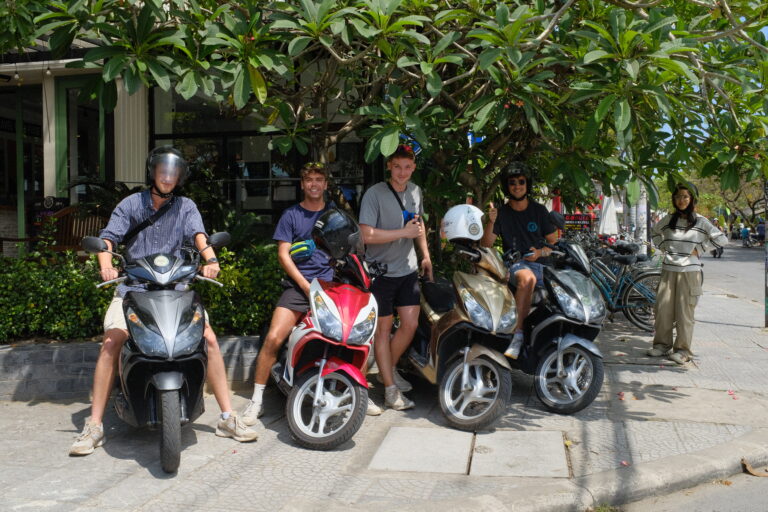 Rental
Hoi An Motorbike Rental (Go outside city)
Travel further with confidence, knowing that support is never far away.
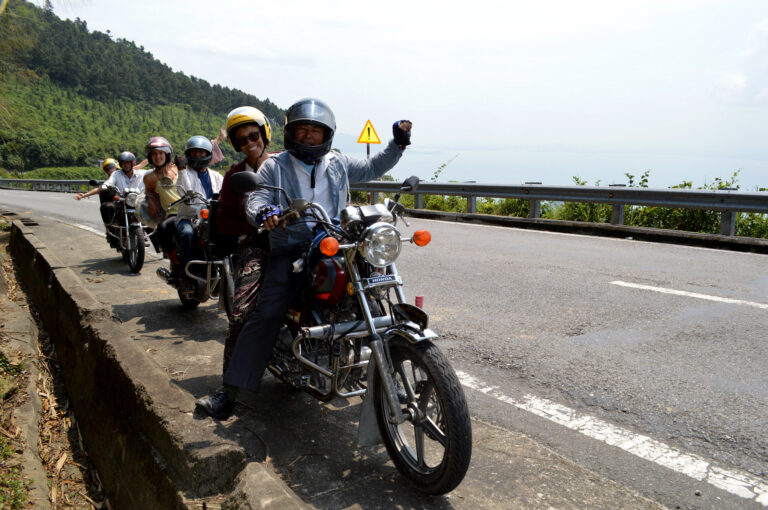 Rental
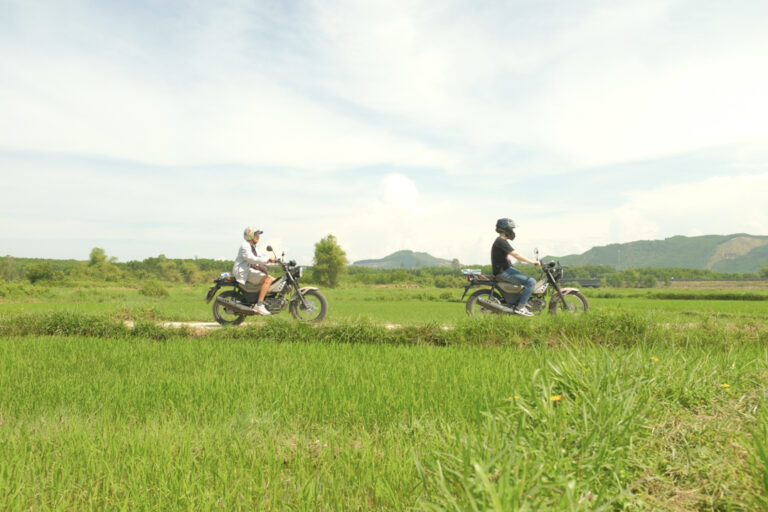
Hoi An to Phong Nha/Dong Hoi (min 3 days)
About this rental: One-way rentals: Hanoi/Saigon, minimum 7 days. Luggage transfer costs $15 per bag. Complimentary luggage transportation is available for one bag per…
 Rental
Hoi An to Nha Trang (min 5 days)
About this rental: One-way rentals: Hanoi/Saigon, minimum 7 days. Luggage transfer costs $15 per bag. Complimentary luggage transportation is available for one bag per…
 Rental
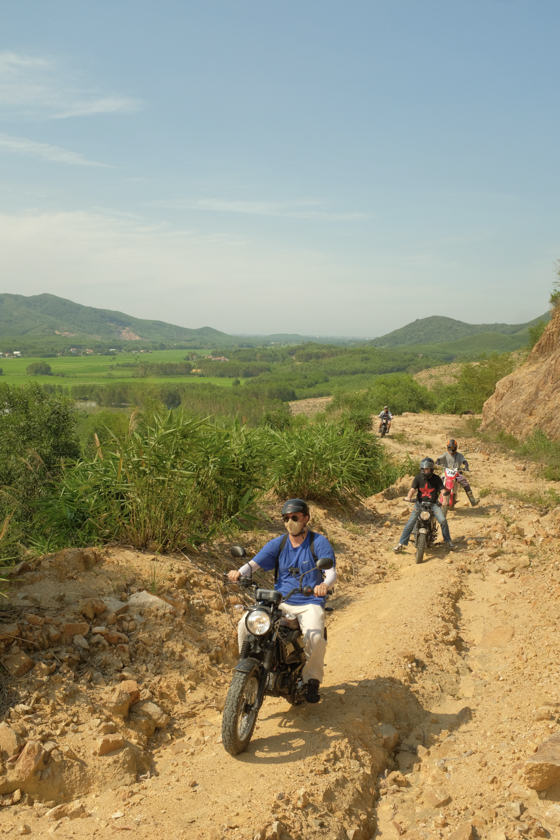
Hoi An to Ninh Binh (6 days)
About this rental: One-way rentals: Hanoi/Saigon, minimum 7 days. Luggage transfer costs $15 per bag. Complimentary luggage transportation is available for one bag per…
 Rental
Hoi An to Ha Noi motorbike rental
About this rental: One-way rentals: Hanoi/Saigon, minimum 7 days. Luggage transfer costs $15 per bag. Complimentary luggage transportation is available for one bag per…
 Rental
Hue to Hoi An One Way Motorbike Rental
About this rental: One-way rentals: Hanoi/Saigon, minimum 7 days. Luggage transfer costs $15 per bag. Complimentary luggage transportation is available for one bag per…






Reviews
There are no reviews yet.